Kathmandu, Sept. 9: For a few quiet moments, the courtyard of the old Federal Parliament building at New Baneshwor fell silent, not with the noise of protest, but with grief, remembrance and prayers for the young lives lost while demanding political change, good governance and accountability.
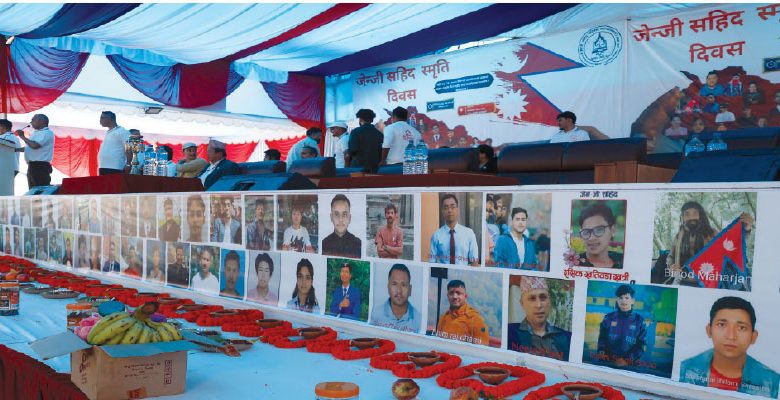
Families of Gen Z martyrs gathered right after one year of September 8 incident at the historic site on Tuesday to remember their loved ones, many struggling to hold back tears as they lit lamps and laid wreaths in their memory. For them, the first Gen Z Martyrs’ Day was not simply a national observance, but a deeply personal moment of loss, remembrance and hope.
The Gen Z Martyrs Welfare Society organised the memorial programme at the premises, which was attended by ministers, lawmakers and representatives from various sections of society. Minister for Home Affairs Sudan Gurung, who also joined the last year movement, attended the ceremony as the chief guest.
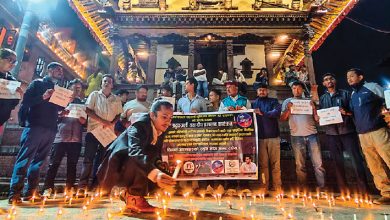
The families paid tribute to the deceased through lamp-lighting and wreath-laying ceremonies. Some stood silently before photographs of their sons, daughters, brothers and sisters, while others were overcome with emotion as the names and sacrifices of the young victims were recalled.For a while, the Parliament premises, which had been badly damaged during the second day of the Gen Z protests, became a poignant gathering place where personal grief merged with the nation’s collective memory.
Among those attending the ceremony was Bigyan Kafle, one of those injured during the Gen Z protests. He said he remained optimistic that the present government would do better by recognising the aspirations of hundreds of young people seeking change and national development.
“I cannot guarantee that a situation similar to that of September 8 will not arise again if the present government fails to address the aspirations of the youth for change,” Kafle said.Leeza Adhikari, another person injured during the protests, said she had thought twice before attending the ceremony, fearing that a similar situation could occur again.
“We do not have many expectations. We simply want to see changes in administrative procedures, improvements in the lives of young people and positive changes for a better Nepal, as well as the implementation of the agreement reached with the Gen Z alliance,” she said.
For many families, the ceremony was an emotional reunion with memories that remain painfully fresh. Mothers clutched photographs of their sons and daughters, while fathers stood quietly, some carrying framed portraits and others holding flowers in remembrance. The faces in the crowd reflected grief, pride and a lingering sense of loss.
Amid the gathering, conversations frequently fell silent as families recalled the final moments they had shared with their children, young people who had taken to the streets with hopes of bringing change, good governance and a better future.
The courtyard, which once echoed with political debates, carried a different sound on Tuesday: the quiet sobs of grieving parents and solemn prayers offered in memory of their children.
Yet, alongside the pain was a strong sense of determination. Many guardians said they wanted the sacrifices of their children to become a lasting reminder to those in power to uphold good governance, accountability and the aspirations of young people.
As the ceremony continued, parents looked towards the portraits of their children with mixed emotions, mourning the lives lost while hoping that the change for which they had sacrificed would not be forgotten.
The emotional scenes reflected the human cost of the Gen Z movement of September 8 and 9, 2025. The government has declared September 8 (Bhadra 23) as Gen Z Martyrs’ Day, along with a nationwide public holiday, to honour those who lost their lives during the movement.
On September 8 last year, the first day of the protests, 19 people were killed after police opened fire during demonstrations in Kathmandu. The protests spread across the country the following day, September 9, resulting in further deaths and widespread destruction of public and private property.
According to the records released, 76 people, including protesters and security personnel, lost their lives. Of those killed, the government has declared 45 people as martyrs, including 42 youths and three police personnel.
The Rising Nepal