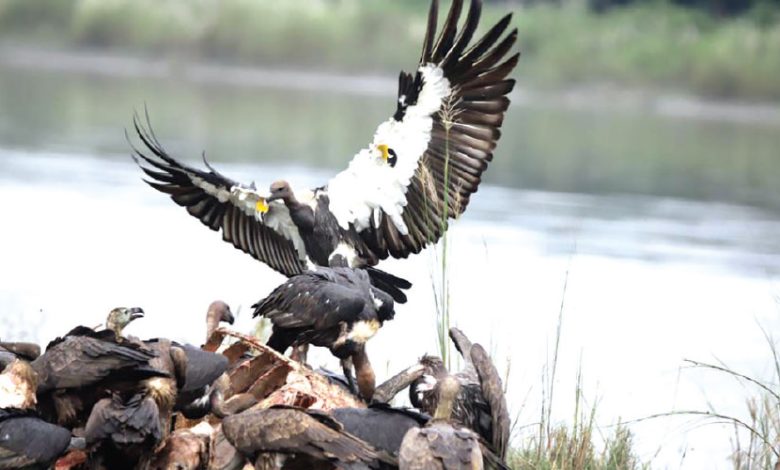
By A Staff Reporter, Kathmandu, Aug. 22: Nepal is witnessing a notable recovery of the critically endangered white-rumped vulture (Gyps bengalensis), with its population increasing by approximately 13 per cent annually since 2012, according to a new study published in Ibis.
The study found exceptionally high annual survival rates of around 95 per cent for adult and 96 per cent for immature white-rumped vultures. Researchers attribute this recovery mainly to the successful elimination of the veterinary drug diclofenac, which was responsible for the catastrophic decline of vultures across South Asia during the 1990s.
The research was conducted by a team of researchers including Bed Kumar Dhakal, Deputy Director General, Department of National Parks and Wildlife Conservation, Krishna Prasad Bhusal, Asia Regional Co-chair, IUCN Vulture Specialist Group and Ankit Bilash Joshi, Vulture Conservation Program Manager, Bird Conservation Nepal.
Vulture populations in Nepal, India, Pakistan and Bangladesh declined by 20 to 50 per cent annually during the crisis. Vultures died after feeding on carcasses of livestock treated with diclofenac, which causes severe kidney failure and death in the birds, said ornithologist Bhusal.
According to Bhusal, Nepal banned veterinary diclofenac in 2006 and subsequently implemented extensive awareness, monitoring and enforcement efforts involving government agencies, conservation partners, veterinarians, livestock owners, pharmaceuticals and local communities. By 2012, diclofenac had ceased to be available in Nepal’s veterinary market, marking a major turning point in the country’s vulture conservation efforts.
Long-term monitoring has also demonstrated strong breeding performance. Between 2007 and 2025, 6,410 vulture nests were monitored, with an average nesting success of around 69 per cent. Satellite tracking and demographic analysis further indicate that the population increase is primarily the result of high survival and successful reproduction within Nepal, rather than large-scale immigration from India, he said.
Nepal subsequently became home to South Asia’s first Vulture Safe Zone, bringing together safe veterinary practices, habitat protection, population monitoring, community participation and safe food sources. Initiatives such as Jatayu Restaurants, which provide vultures with safe livestock carcasses, have further strengthened conservation efforts, the research said.
Despite this encouraging recovery, conservationists expressed that country’s white-rumped vulture population remains far below its pre-1990s level. Emerging veterinary drugs also pose a continuing threat. Strict monitoring of NSAIDs available through veterinary pharmacies and scientific safety testing of new veterinary drugs will therefore be essential to prevent another crisis.
Surveys were conducted in four main regions of the country — Eastern and Western Tarai (lowlands) and Western and Sudhurpaschim (mid-hills). These regions hold most of country’s populations of Critically Endangered vultures.
The research, “Nepal’s experience offers hope for other South Asian countries where vulture populations remain critically low. It demonstrates that coordinated, science-based conservation can reverse even a catastrophic population decline — but sustained vigilance and action will be essential to keep vultures flying safely in Nepal’s skies.”
The research was jointly conducted by DNPWC, BCN, Royal Society for the Protection of Birds (RSPB) and Saving Asia’s Vultures from Extinction (SAVE).
The Rising Nepal