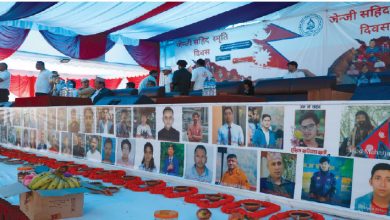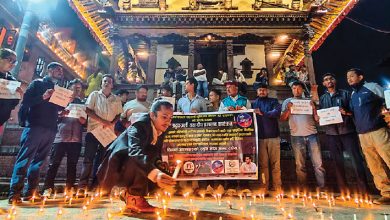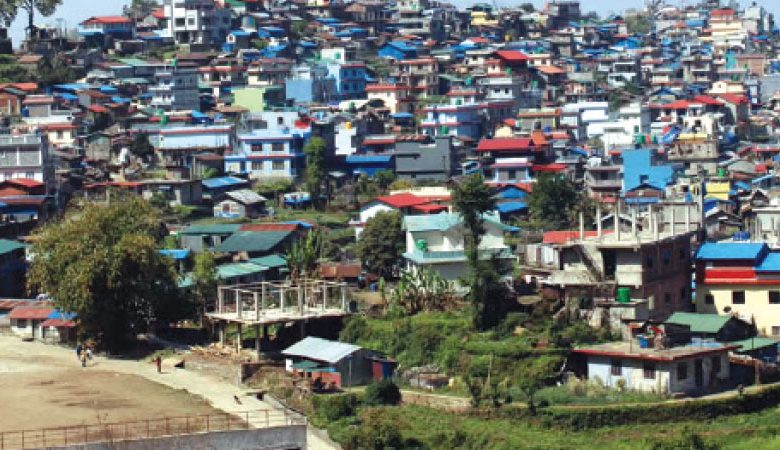
BY GANA BAHADUR ROKA,Sulikot, Apr. 26: Twelve years have passed since the devastating Gorkha earthquake, which had its epicentre in Barpak, Gorkha. The 7.8 magnitude earthquake struck at 11:56 am on April 25, 2015, killing 471 people in Gorkha district alone.
The earthquake caused extensive damage across 14 districts, including Gorkha. Thousands of homes collapsed, hundreds of lives were lost, and the lives of survivors were completely changed.
However, even after 11 years, some families in the Dalit settlement of Gairagaun, Barpak Sulikot Rural Municipality-1, are still forced to live in temporary shelters.
Reconstruction has been completed in most areas after the earthquake. Permanent houses, schools, health facilities, and road infrastructure have been built.
However, more than 15 families in the Dalit settlement are still waiting for permanent housing. Their lives remain stuck between two problems: they cannot rebuild in their original settlement because it has been declared unsafe, and they are unable to obtain land in a new location to settle.
“In Gairagaun, Barpak, people still cannot sleep peacefully at night,” said resident Tul Bahadur BK. “As soon as the rainy season begins, water and hail leak into the temporary shelters. We spend nights protecting children and elderly people from the rain,” he said.
According to Ward Member Laxmi BK, everyone wants to build permanent house, but the lack of land has made the situation even more complicated. Some families want to return to their original settlement, while others are ready to move to safer locations. However, due to unresolved land management issues, they remain in confusion.
After the earthquake, there was a plan to develop Gairagaun as a ‘living museum.’ However, the plan could not be implemented due to a lack of local consensus. This has further delayed settlement management, and the Dalit community has been directly affected by it.
“The main challenge in resolving the problems of the Dalit settlement is land management,” said Barpak Sulikot Rural Municipality Chairperson Bishnu Bhatta. “We are working to provide safe and permanent housing for Dalit families, but the shortage of land plots has created difficulties. Still, we are moving forward with efforts to find an immediate solution.”
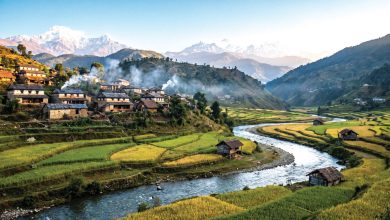
He also stated that Barpak, once a single rural village after the earthquake, was gradually developing into a new hill town. He added that Barpak has gained increased attention after the earthquake, and many visitors now come to see how it has changed.
Even 11 years later, reconstruction for the Dalit settlement in Barpak remains incomplete. Their suffering is not only about the lack of houses but also about the lack of opportunity and equality. Still living in temporary shelters, their lives continue to raise a question: is development truly equal for everyone?
The Rising Nepal