Indira Aryal
Kathmandu, Sept. 14: With almost three weeks left before the usual retreat of monsoon rains, flashfloods have recently wreaked havoc in Darchula and other districts of the western part of the country.
The flash floods and landslides due to heavy monsoon rains on Friday night killed five people and 10 people went missing in the Darchula district in Sudhurpaschim Province.
The disaster in Darchula was due to monsoon rain as the monsoon remains active in the western part of the country, according to the Department of Hydrology and Meteorology (DHM).
According to the National Disaster Risk Reduction and Management Authority (NDRRMA), at least 45 people died and 12 have gone missing while 61 sustained injuries since the monsoon started on June 5.
Madhukar Upadhya, climate change and climate finance expert, that said it was interesting that this time heavy rainfall was witnessed in the western part of the country and Uttarakhand and Himachal Pradesh in India as well as Pakistan while the eastern part of the country that used to receive more rainfall in the past could not receive sufficient rains this year.
Ganga Nagarkoti, a senior meteorologist at the Meteorological Forecasting Division under the DHM, said chances of heavy rainfall in the Sudhurpashim Province were high for another three days. “This season, the monsoon has been active in the western part of the country, this is a normal process as sometimes monsoon remains active in the east and sometimes in the west,” she said.
The monsoon can end one week earlier or after the expected time period, she said. Earlier, the monsoon used to end on or around September 23 but this time the monsoon system is likely to extend up to October 3.
Upadhay said, “To cause rainfall across the country, the low-pressure system should be above the Terai region but this year the low-pressure system remained mostly in the middle part of India, sometimes moving to the northern part of Nepal. We receive low rain if the low-pressure system remains active in the middle part of India and when the system comes towards the Himalayan range, we receive sufficient rainfall and India receives less.”
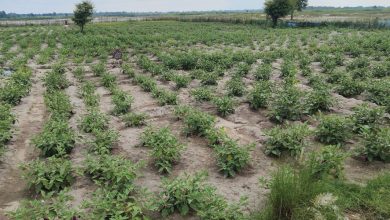
But this year, it was interesting that India received sufficient rainfall when the pressure system remained in the middle of India and again it received heavy rainfall when the system came across the northern part, he said. “We had witnessed the cloud cover in the sky but received less rain this time and it is unusual. We received rainfall sufficient only for grassland but not for paddy crops,” he added.
The quantity of rainfall was enough but could not be localised for agriculture production. “It’s not new to have dry spells but a situation like this year’s is rare,” he added.
We have been witnessing sporadic rainfall in recent years. We see rainfall in Thamel and Patan and no rainfall around Singha Durbar and Baneshwor, so we call it sporadic rainfall, Upadhya said.
“If rainfall shifts to the eastern part, there is a high possibility of heavy rainfall in the areas like the rainfall we received last year in October,” he said. “We can say the uncertainty is due to climate change which proved to be a disaster in Pakistan.”TheRisingNepal/from