By Bom Lal Giri, Nawalpur, July 12: The lifestyle of the Bote community, a minority group living along the banks of various rivers across the country and traditionally earning a living through boating, fishing, and gold panning, has begun to change.
In recent years, as their traditional occupations have come under threat due to the contract system on rivers, declining aquatic life, and stricter regulations, the Bote community has started embracing alternative livelihoods.
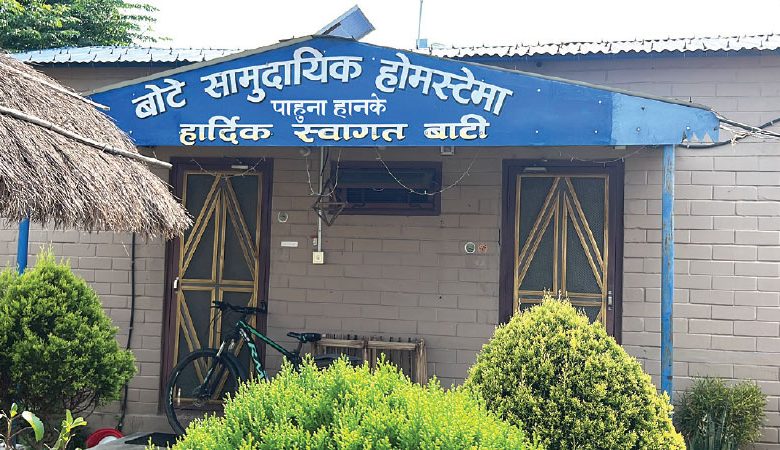
The Bote people living along the riverbanks of Nawalpur and Chitwan have now begun making homestays and nature guiding their primary sources of income.
Gyan Bahadur Bote, a leader of the Bote community in Nawalpur and secretary of the Majhi, Musahar, and Bote Welfare Service Committee, said these new occupations have helped improve the community’s standard of living while also preserving its culture.
According to the 2021 National Census, Nepal’s Bote population stands at 11,258, with 28 per cent living in Chitwan and 22 per cent in Nawalpur.
Tourists visiting the homestays are welcomed by members of the local Bote community with Binti Bati—a traditional gesture of respect for dignitaries and guests—along with tika and flower garlands.
Guests are then served traditional local delicacies, including various duck dishes, locally grown leafy greens, nihuro (fiddlehead fern), fish pickles, snails, and bamboo shoots (tama).
Sarita Bote of Kawasoti-17 said she no longer has to depend on the rivers and forests for her livelihood. Instead, she spends her days welcoming and hosting guests at the homestay and preparing traditional dishes. She expressed hope that the hardships her community has long faced will gradually come to an end.
Jag Narayan Bote, operator of the Bote Community Homestay, said that of the 120 households in Bankatta of Madi Municipality, Chitwan, 30 are affiliated with the homestay. He said the community is now placing greater emphasis on education while adapting its livelihoods to changing times by pursuing more professional occupations.
He added that homestays have played a significant role in preserving the Bote language and culture.
“Our language and culture are on the verge of extinction. To preserve them, we organise cultural programmes featuring traditional dances and songs to entertain guests staying at the homestays,” Jag Narayan said.
Traditional performances such as Sohorna, Jagiya, Goleni, Solti-Soltina, Sorathi, and Maruni are regularly presented. According to him, these dances reflect the rich cultural heritage of the Bote community.
Rajendra Bote, president of the Nepal Bote Society, Nawalpur, said the organization is promoting homestays and nature guiding as alternative livelihoods to improve the socio-economic status of the community while preserving its art and culture.
He said that because many members of the community live around Chitwan National Park and its buffer zone, they have started earning income by guiding tourists and introducing them to the area’s natural attractions.
He added that the growing number of visitors to Chitwan National Park, particularly those taking jungle safaris from areas such as Amaltari and Dibyapuri in Nawalpur, has increased young people’s interest in working as nature guides.
Rajendra said employment opportunities for nature guides have expanded since the government made it mandatory for every group on a jungle safari to be accompanied by at least one licensed guide. According to him, around 30 people from the Bote community have received nature guide training, and some have already obtained licences.
Since the establishment of the homestay, local residents have also begun commercial vegetable farming as well as poultry, duck, goat, and fish farming. Community groups have been formed to mobilise savings and provide low-interest loans to members who wish to start their own businesses.
The Rising Nepal