Raman Paudel
Kathmandu, Sept. 7: Padam Prasad Aryal, 70, of Battar in Bidur Municipality, is still unable to accept the disaster caused by the Bhotekoshi floods. The torrents destroyed his house and washed away 50 ropanis of farmland. After the floods destroyed all the farmland he had been cultivating for four generations, Padam Prasad fell unconscious for a few hours.
He managed to escape the floods and has been receiving treatment at Trishuli Hospital since the day of the flood on August 26.
“My father could not look at his fields after the floods washed them away. Even now, when he thinks about the farmland, he starts crying and becomes speechless,” said his son Sambhu, who is taking care of Padam Prasad, from the hospital.
Shambhu added that for his father, the flooded field was not just farmland, but also a source of income, where Padam Prasad’s long legacy and deep emotions were connected.
As the flood swept away the field, Padam Prasad went through deep trauma, leading to hospitalization. Like Padam Prasad, hundreds of elderly farmers in Battar, Pipaltar, Betrawati, and nearby areas are being traumatized after being left homeless by the flood.
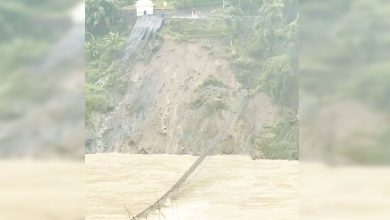
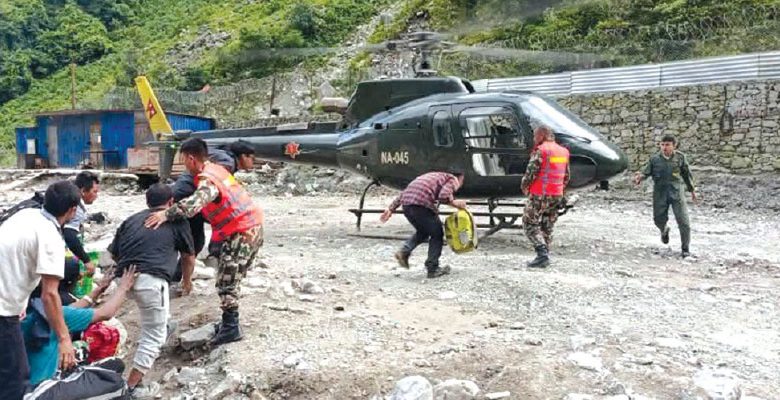
More than a thousand people have died due to the flood in the Bhotekoshi River in Rasuwa on August 26. Hundreds of people have been injured while thousands are still missing. Thousands of people have been displaced.
According to experts, many people are believed to be at risk of mental health issues in such a devastating disaster. However, they suggest that psychotherapy as well as consultation are essential for the flood-affected people.
Dr. Rojan Pokharel, a psychiatrist, said that psychological first aid is essential for the victims in such a sensitive condition, as the natural disaster can have a profound impact on a person’s mental health.
“The first step is to listen carefully to the victim. Just listening to their pain and experiences can provide a lot of relief. Before giving advice or sermons to the victims, it is important to manage their basic needs such as food, shelter, and clothing,” Dr. Pokharel suggested.
According to Dr. Pokharel, the first week after a disaster is very challenging from a mental health perspective, requiring a lot of care, and care will continue to be needed in the days following, so it is very important to provide appropriate support and empathy during this time.
Experts stated that it is natural to experience fear, anxiety, stress, depression, insomnia, and uncertainty about the future during such times.
It is equally important to protect your mental health along with your physical health during times of disaster. Being mentally strong does not mean suppressing your emotions. It is not uncommon to feel scared, want to cry, or feel weak during times of disaster. Being mentally strong does not mean hiding your sadness and pain, but rather developing the ability to cope with difficult situations by accepting your feelings. Being able to say, ‘I am scared’ is not a weakness, experts suggest.
How long will the disturbed mentality last?
According to Dr. Sagun Ballav Panta, a psychiatrist, the psychological impact of a disaster can last for years. Symptoms such as acute stress disorder may appear in the initial stages. The person may feel extremely confused, scared, agitated, unable to sleep at night, and worried that the same thing will happen again.
“Over time, symptoms of hopelessness, loneliness, depression, and anxiety may appear. Some people may also experience post-traumatic stress disorder. The traumatic event may be repeatedly recalled, the event may feel like it is being repeated, agitated and fearful, and it may be difficult to return to normal life,” Dr. Panta said.
Along with depression and anxiety, problems such as psychosis may also appear in some cases. In the immediate aftermath of a disaster, a person’s attention is focused on saving lives and finding relatives.
Dr. Panta added that as the situation of food, shelter, and security gradually stabilizes, they begin to realize what they have lost. The pain of losing a home, property, family members, or employment and lifestyle can then deepen.
Experts also suggest that to deal with such conditions while in the initial stage, practicing yoga and meditation as much as possible to provide mental peace is essential. In addition, practicing ‘deep breathing’ and group discussion also helps to keep the body and mind calm.
How to provide mental health care to victims?
The government, as well as various organisations, has initiated efforts to deal with mental health issues after the flood, as it is believed that many children, senior citizens, and vulnerable communities have been feeling insecure.
In recent days, the government has urged flood-affected people to reach out to health officials, aiming to deal with their mental health issues. For this, the Ministry of Health and Food Safety has provided a toll-free number and has stated that victims can share their post-disaster thoughts and feelings, assuring that the talks will be kept confidential and a counselor will listen to victims’ voices.
It is also said that victims can reach out to social workers, teachers, women’s health volunteers, health assistants (HAs), nurses, and primary care doctors at the local level, are the first point of contact for citizens.TheRisingNepal