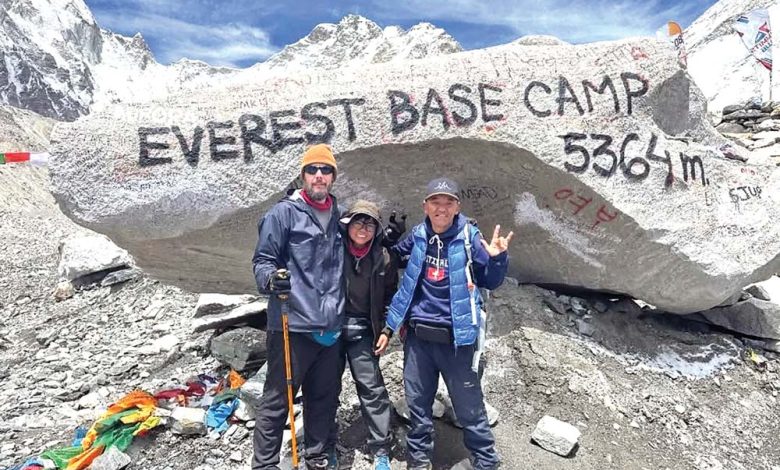
Kathmandu, May 17: Silent conversations are becoming an increasingly common sight along country’s mountain trails.
These conversations are not carried out through spoken words, but through sign language. The growing involvement of deaf trekking guides is opening a new chapter of inclusive tourism in the country, said Nepal Tourism Board in its information to the press on Saturday.
Chop Prasad Paudel and Chhiri Sherpa have emerged as inspiring examples of this change. Mountain trekking requires more than physical endurance. It also demands confidence, courage and opportunity. Chop Prasad and Chhiri Sherpa have become examples of that determination.
After years of working in the tourism sector as a porter and hotel cook, Paudel recently completed the world-famous Manaslu Circuit Trek, offering new hope for inclusive tourism in the country. He successfully completed the challenging 15-day trek, which reaches an altitude of 5,106 metres. His journey is not only a personal achievement but also an inspiring message for people with disabilities.
Paudel said he joined a trekking guide training programme for deaf youths after learning about it through a sustainable tourism project jointly operated by the Nepal Tourism Board and the United Nations Development Programme.
“There was a huge difference in my trekking experience before and after the training,” he said. “The training increased my confidence and taught me how to manage difficult situations.”
After completing the training, he contacted two French tourists through social media. Following the required preparations, he guided them successfully on the Manaslu Circuit Trek with the support of an assistant. Manaslu is considered one of country’s most difficult trekking routes. However, Paudel said the knowledge and practical skills gained during the training — including mountain safety and tourist management — made the journey easier.
“After this trek, my confidence has grown even more. Now I want to trek on other routes across the country as well,” he said.
The training included both theoretical and practical lessons on mountain safety, first aid, trail management, hospitality, cultural interpretation, environmental responsibility, crisis management, and Nepal’s geographical and cultural diversity.
Paudel’s experience highlights the growing opportunities for the deaf community in Nepal’s tourism industry.
Another example is trekking guide Sherpa, who has long been guiding foreign tourists along Himalayan trekking routes. Using sign language, Sherpa communicates with tourists and independently manages trekking plans and travel preparations through video calls.
Recently, he successfully guided an American tourist and his deaf Nepali wife on a trek covering Gokyo Lakes, Cho La Pass, Everest Base Camp and Lukla.
According to Sherpa, sign language creates a unique sense of trust and connection during travel. “We communicated through signs throughout the journey. Understanding and behaviour became more important than words,” he said. Tourism stakeholders have described the trekking guide training programme for deaf youths as an important initiative for promoting inclusive tourism in the country.
President of the National Federation of the Deaf Nepal, Santosh KC, said deaf youths can also make meaningful contributions to Nepal’s tourism sector.
According to the World Health Organisation, around 430 million people worldwide are affected by hearing loss, while more than 70 million use sign language. Manager of the sustainable tourism project, Dharmaraj Dawadi, said he was encouraged to see Nepal’s initiative emerging as an effective example of inclusive tourism.
“Nepal’s tourism is no longer limited to mountains and natural beauty alone,” he said. “The practice of inclusion and equal opportunity is making tourism more humane and broader.”
The experiences of Paudel and Sherpa have shown that with proper training and opportunities, members of the deaf community can become capable guides and representatives of the country’s tourism industry.
They have urged the government, tourism entrepreneurs and concerned stakeholders to create more employment opportunities and support for the deaf and youths with disabilities.
TRN Online