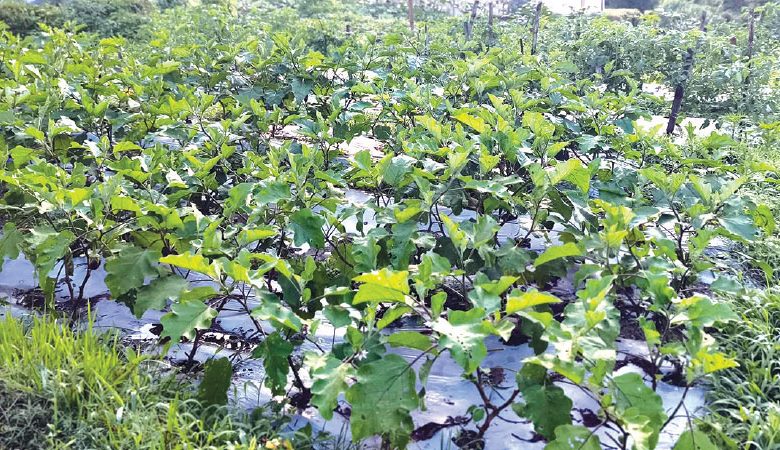
Photo: Sher Bahadur Sarki/TRN Agricultural farm cultivated and managed by students of Kirtichaur Secondary School.
By Sher Bahadur Sarki, Bajura, Aug. 9: Students at Kritichaur Secondary School in Bajura have been combining classroom learning with income generation through agricultural education, turning their school into a practical learning hub.
The school, located at Kaladah in Gaumul Rural Municipality-4, introduced Crop Science for students in Grades 9 to 12 in the 2021 academic session. Since then, students have been gaining hands-on farming skills while earning from vegetable production.
Previously, students wishing to pursue technical education had to travel to urban centres, making it difficult for those from financially disadvantaged families to continue their studies. The school said it introduced agricultural technical education in the rural area to make vocational learning more accessible and help address youth unemployment.
Milan Bohara, a Grade 12 student, said he had been studying and earning simultaneously since joining the Crop Science programme in Grade 9.
“If I can continue my education, that will be good. But my family’s financial situation is weak. Even if I cannot study further, I can make a living by growing vegetables at home,” he said.
Bohara added that securing a salaried job was not his only ambition.
“I am learning practical skills alongside my studies. After completing Grade 12 next year, I plan to return home, establish my own farm and focus entirely on commercial vegetable farming,” he said.
Students enrolled in the Crop Science course have transformed the school grounds into thriving vegetable gardens. The school has also leased more than four ropanis of nearby land, where students cultivate a wide range of vegetables, including aubergines, tomatoes, chillis, radishes, mustard greens, coriander, ginger, garlic, onions and beans.
Once operating without any income, the school now generates revenue from vegetable sales. Part of the earnings is used to purchase sports equipment and other materials required by students.
Teachers say the practical approach has significantly boosted students’ confidence. Unlike previous generations, who often completed school without employable skills, even Grade 9 students now believe they can earn a livelihood through agriculture while continuing their education.
The school currently operates between six and 12 plastic tunnels for vegetable cultivation. The initiative has received financial support from the Agriculture Knowledge Centre in Bajura, while a climate change programme is assisting with tree plantation and greening activities around the school.
Kritichaur Secondary School also runs a Himalayan residential programme, where 78 students live on campus. According to Headteacher Man Bahadur Baduwal, part of the vegetables produced by Crop Science students is supplied to the residential students.
The school currently has 513 students, including 253 girls and 260 boys. Of these, 90 are enrolled in the Crop Science programme, with 18 students each in Grades 9 and 10, 26 in Grade 11 and 28 in Grade 12.
Baduwal said vegetable production declines during winter because of the harsh cold in the Himalayan district. However, from May to October, the school produces vegetables in abundance.
According to Lal Bahadur Bista, Information Officer at the Education Development and Coordination Unit, Bajura, four schools in the district currently offer agricultural education. Bhanodaya Secondary School in Budhiganga Rural Municipality-5 and Dhuralsain Secondary School in Budhiganga-2 teach Animal Science, while Dasharath Chandra Secondary School in Khaptad Chhededaha Rural Municipality-7 and Kritichaur Secondary School in Gaumul Rural Municipality-4 offer Crop Science.
The Rising Nepal