By Sudha Deo, Bhardaha (Saptari), June 20: Mango traders in Saptari, known as the “capital of mangoes”, have been earning millions of rupees during the season of mango.
From the first week of June to mid-August, both small and large traders earn between Rs. 100,000 and Rs. 1 million.
Forty-five-year-old Mandira Chaudhary of Sirkajari in Shambhunath Municipality, Saptari, is currently busy selling mangoes.
Alongside household chores, she is engaged in mango trading during the season.
She said she owns a mango orchard spread over about 2.5 bighas of land, and as this is a good fruiting year, she has been extremely busy.
She said, “We do not produce mangoes using chemicals like commercial traders. As a result, some years the trees bear fruit and some years they do not. The income from a fruitful year is enough to cover all household expenses for the entire year.”
She added that traders usually lease mango orchards for three to ten years, and they have to pay the landowners regardless of whether the trees bear fruit.
Therefore, they are compelled to use more chemicals to ensure higher yields. However, as they own their orchards, they do not face such pressure and produce chemical-free mangoes, she said.
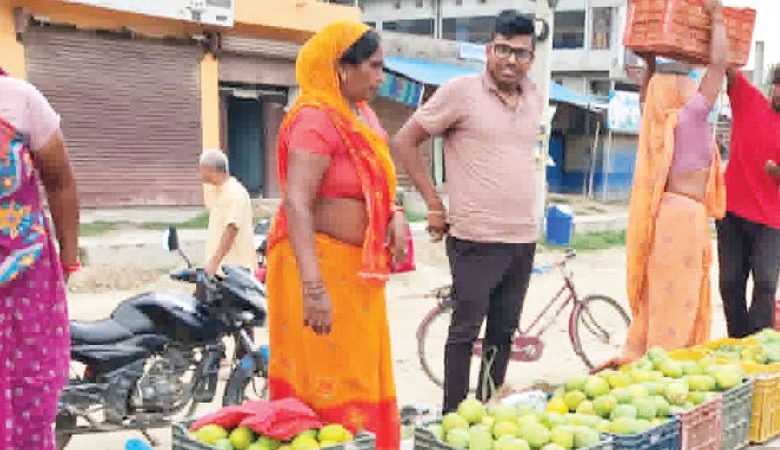
Men in the household harvest the mangoes and supply them to traders, while women handle retail sales from home and also take baskets to market for direct selling.
Most of the mango sellers in the market are women. During the season, mangoes are sold at prices ranging from Rs. 50 to Rs. 100 per kg, she said.
Dakshya Narayan Shrestha of Rupnagar in Kanchanrup Municipality of Saptari said his family earns between Rs. 500,000 to Rs. 1 million annually from mango sales.
He said, “All household expenses of the year are managed through mango sales. Not only my family, but also mango traders in the northern belt of the highway area—Shambhunath, Rupani, Sitapur, Birendra Bazaar, Dharmapur, Rupnagar and surrounding areas—cover their household expenses through mango trading.”
Although several varieties of mangoes such as Maldah, Bombay, Kalkatiya, Amrapali, Dashahari, Sarahi and Kishanbhog are grown in the district, the Maldah variety, considered the “king of mangoes,” is most preferred by consumers and therefore sells the most.
Mango trees naturally bear heavy and light yields in alternate years. Although this year was an “on-year” for mango production, unseasonal rainfall and strong winds have reduced production, according to the Agricultural Knowledge Centre, Saptari.
Mango cultivation covers a total of 9,100 hectares in the district. After storms and rainfall, only
Mango cultivation covers a total of 9,100 hectares in the district.
Following storms and rainfall, only about 25 per cent of the fruits in the southern belt remained in good condition.
However, production in the northern belt, where farmers manage orchards commercially with proper care and the use of agrochemicals, has improved.
Overall, mango production has increased by 20 per cent compared to last year, reaching 72,800 tonnes, said Roshan Mehta, chief of the Agricultural Knowledge Centre.
The Rising Nepal